
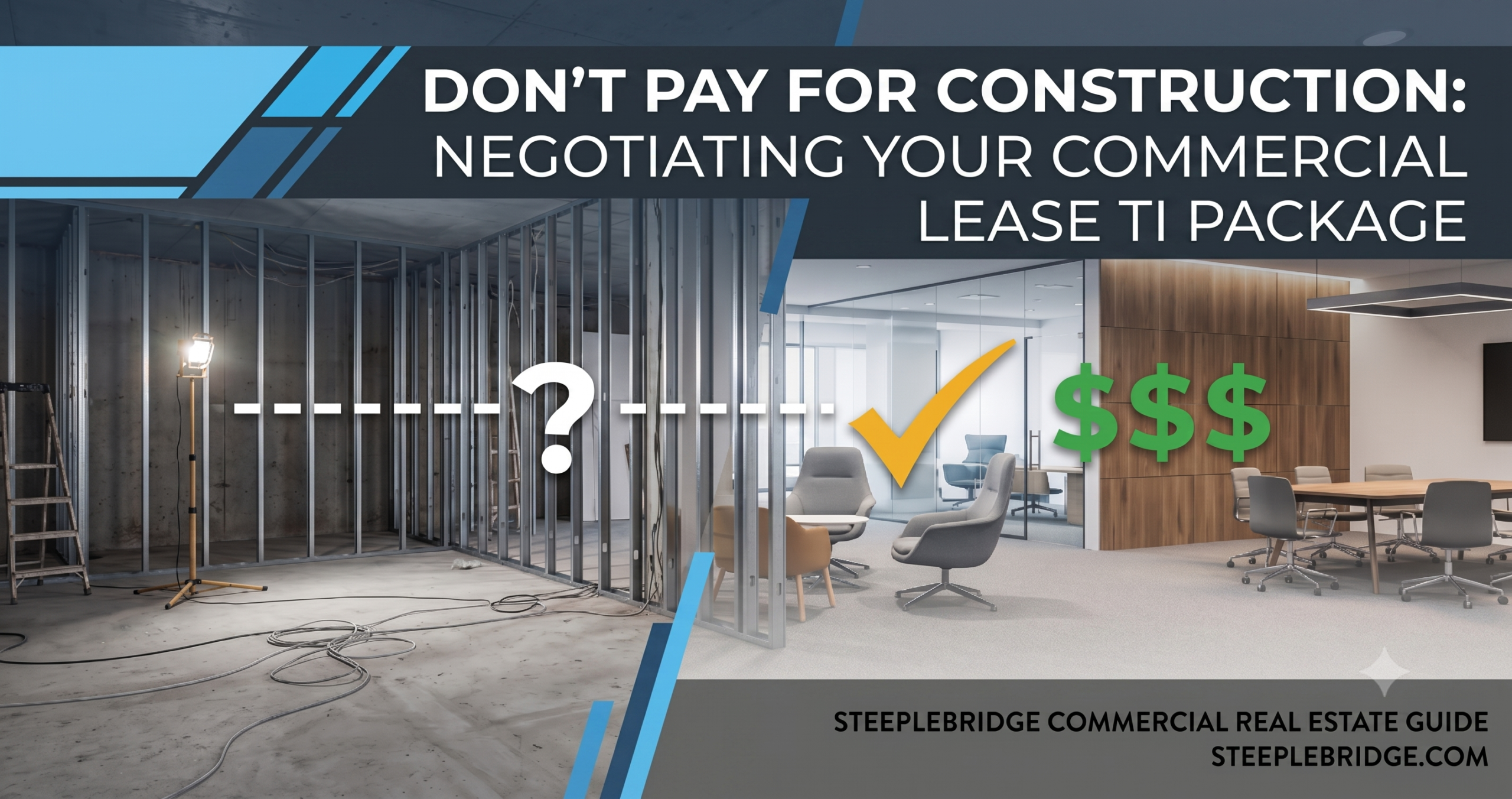
Relocating or expanding your business into a new commercial office, retail, or industrial space is an exciting milestone. However, the excitement can quickly fade when confronted with raw concrete floors, exposed wiring, and a layout that looks nothing like your operational reality. The cost of taking a blank canvas space and transforming it into an efficient, brand-aligned workspace can easily skyrocket to tens or hundreds of thousands of dollars.
Here is the critical reality that most modern corporate tenants miss: you shouldn’t be footing that bill alone. Through an aggressively structured strategy targeting tenant improvement allowance negotiation, you can leverage market dynamics to compel landlords to heavily subsidize—or completely cover—the price of your workspace build-out.
Introduction
Entering a commercial lease is far more than an agreement on base rent per square foot; it is a complex partnership. Understanding how capital flows between both parties before you sign a Letter of Intent (LOI) determines your financial agility for years to come.
What is a Tenant Improvement (TI) Allowance?
A Tenant Improvement (TI) allowance is a designated pool of capital provided directly by the landlord to a tenant to fund physical alterations, construction, and finishes within a leased commercial space. Typically expressed as a dollar amount per usable square foot (e.g., $50.00/USF), this allowance acts as an incentive package to reduce the friction of an expensive relocation or market expansion.
Why Landlords Are Willing to Fund Your Build-Out
At first glance, it may seem counterintuitive for a property owner to pay for your walls, flooring, and lighting. However, landlords operate on long-term asset valuations. A beautifully built-out office space increases the overall residual value of their building. If you sign a long-term lease, your capital-backed business becomes a reliable revenue stream that satisfies the landlord’s underwriting lenders. Additionally, vacant space generates zero cash flow while incurring holding costs, giving owners a profound incentive to deploy capital upfront to secure creditworthy tenants.
TI Allowance vs. Turnkey Build-Outs: Which is Right for You?
Before launching a negotiation campaign, you must identify how you want the construction process managed. Landlords typically offer two pathways to modify your space: a financial allowance or a turnkey solution.
The Pros and Cons of a Tenant Improvement Allowance
Opting for a standard TI allowance grants you complete operational control. You retain your own architect, bid out the project to preferred general contractors, and drive every design choice. The upside is quality assurance and tailored execution. The downside is risk ownership. If construction material prices spike or field delays occur, any costs exceeding the agreed-upon per-square-foot allowance fall squarely on your shoulders.
When to Choose a Landlord Turnkey Build-Out
In a turnkey arrangement, the landlord manages the entire build-out process from permitting to finishing based on an agreed-upon space plan. The substantial benefit here is risk mitigation: the landlord absorbs all cost overruns and construction delays. However, this convenience comes at a price. Landlords managing turnkey builds are highly incentivized to use cheaper finishes and cut minor corners to maximize their internal profit margins.
Steeplebridge Pro-Tip: If your business layout demands highly specialized infrastructure (e.g., medical clinics, specific IT laboratories, or premium hospitality spaces), protect yourself by pursuing a raw TI allowance with absolute design oversight. For standard professional services layouts, a heavily vetted turnkey plan is often safer.
Key Factors that Influence Your Leverage in TI Negotiations
Negotiation leverage is not arbitrary; it is built on measurable criteria. To demand that the property owner fund your build-out, you must evaluate where you stand across several variables.
Current Commercial Real Estate Market Conditions
Commercial leasing is driven fundamentally by supply and demand. In a tenant’s market characterized by rising vacancy rates and downward pressure on rents, landlords are forced to be highly aggressive with concessions. High TI allowances become their primary tool to stabilize face rents and protect their building’s capitalized value.
Your Creditworthiness and Lease Term Length
Landlords and their underwriting banks look at risk profiles. A well-capitalized tenant with years of audited financial history who is willing to commit to a 7-year or 10-year term represents a secure investment. The longer your lease term commitment and the stronger your balance sheet, the more capital a landlord will confidently deploy upfront for your improvements.
The Asset Value and Residual Value of the Improvements
Will the changes you make to the space benefit the next tenant? If you are building clean, modern conference rooms, standard perimeter offices, and a functional break room, your build-out holds a high residual value for future lease cycles. If your build-out is highly eccentric or hyper-specific, the landlord knows they will have to demolish it later, decreasing their willingness to fund it today.
Step-by-Step Strategy to Negotiate a Maximum TI Allowance
To successfully capture a premium allowance package, you must follow a disciplined, structured approach throughout the leasing conversation.
1. Detail Your Real Costs Before Talking to the Landlord
Never walk into a negotiation blind. Engage an independent space planner or general contractor early on to sketch a rough preliminary floor plan and provide realistic local construction estimates. Knowing whether your build-out costs $45 or $75 per square foot ensures your initial counter-proposal is backed by real, irrefutable data.
2. Leverage Multiple Properties to Create Competition
The single greatest point of leverage you possess is the ability to walk away. Always negotiate on two or three viable properties simultaneously. Let the prospective landlords know that you are considering multiple options and that the structural value of their tenant improvement package will be the deciding metric.
3. Tie Higher Allowance Requests to Longer Lease Commitments
If a landlord hesitates at your construction cost target, offer a trade-off. Propose expanding a 5-year lease request to a 7-year or 8-year commitment in exchange for a scaling up of the TI allowance. This amortizes the landlord’s upfront capital across a longer term, maintaining their required internal rate of return (IRR) while eliminating your out-of-pocket expenses.
4. Define What “Unused Allowance” Becomes (Rent Credit)
A common mistake is neglecting what happens if your construction project finishes under budget. If you negotiate a $60/SF allowance but only spend $52/SF, the remaining $8/SF usually defaults back into the landlord’s pocket. Ensure your lease language explicitly dictates that any unused TI balance is automatically converted into a free rent credit applied to the early months of your tenancy.
Crucial Lease Clauses to Watch Out For
The headline allowance figure on an LOI can be highly deceptive if the legal boilerplate clawback mechanisms are left unchecked.
Construction Management Fees Paid Back to Landlord
Many standard leases contain a hidden clause stating that the landlord will charge a “supervision fee” or “construction management fee” of 3% to 5% of the total build-out cost to oversee your contractors. This means a significant chunk of your hard-negotiated cash is simply routed straight back to the landlord. Fight to strike this fee completely, or cap it at a nominal administrative amount.
Restoration and Removal Obligations at Lease End
Always review the “Surrender of Premises” or “Restoration” provisions. Some landlords include language requiring the tenant to pay to tear down the improvements and return the space back to its original condition when the lease expires. Negotiate a clause stating that all approved tenant improvements remain the property of the landlord and that no restoration obligations apply upon normal lease expiration.
Conclusion: Build Your Dream Space on the Landlord’s Dime
Your commercial space dictates your operational flow, your talent recruitment potential, and your daily brand presentation. You do not have to compromise on design quality or drain vital working capital to achieve your ideal layout. By executing a targeted strategy, presenting a strong credit profile, and thoroughly auditing the underlying lease language, you can position your business to successfully secure a premier workspace build-out entirely funded by the landlord.
Ready to plan your next commercial acquisition? Contact the expert advisory team at Steeplebridge.com today for data-driven tenant representation strategies that maximize your leverage.
Want to know what you can afford? Use our Commercial Lease Calculator.