
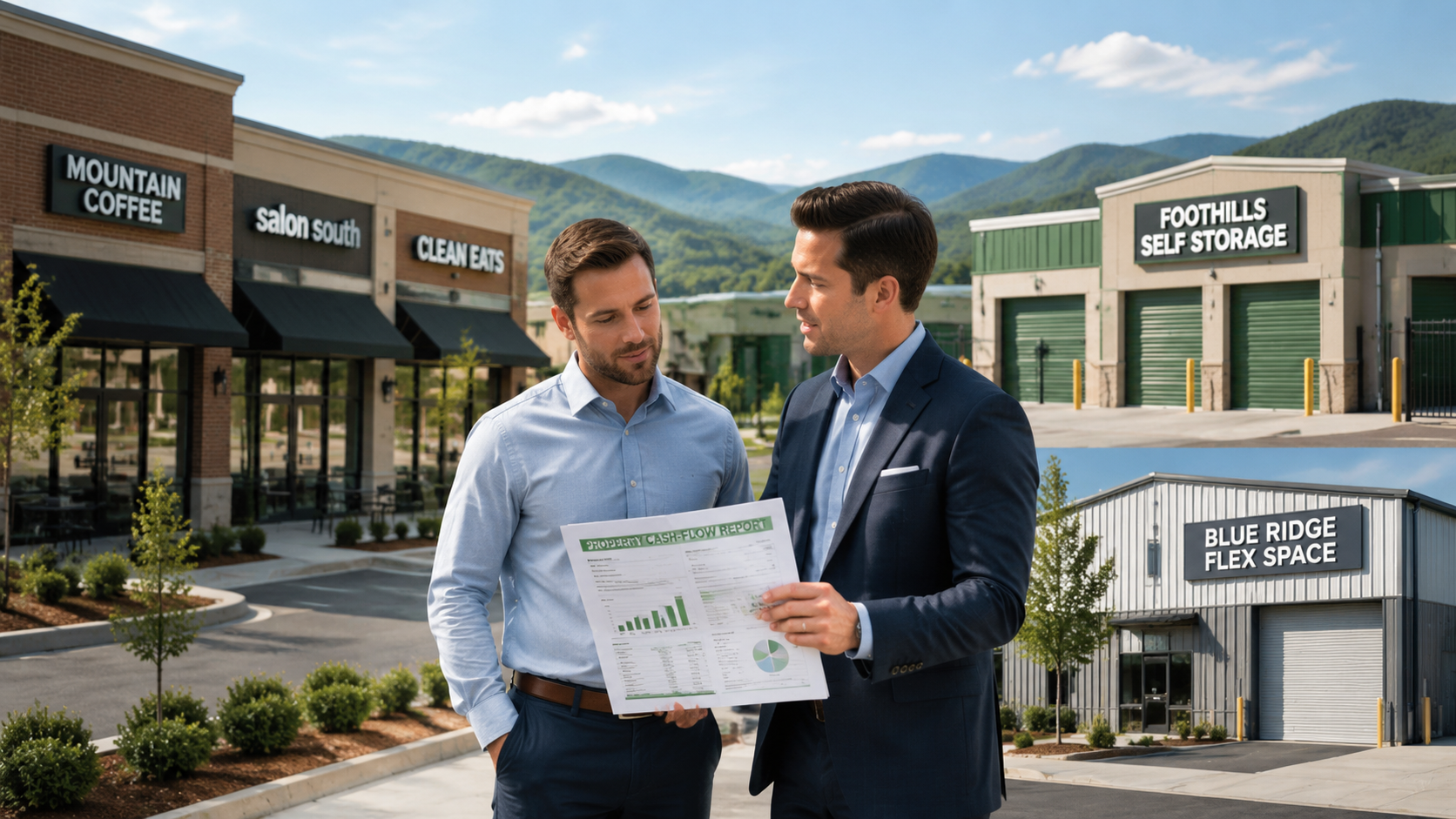
Buying your first commercial real estate investment is exciting. It can also feel overwhelming. There are office buildings, shopping centers, warehouses, apartment buildings, restaurants, hotels, and many other property types to choose from. If you are just getting started, it is easy to believe that bigger properties always make more money. The truth is, the best first investment is usually not the biggest one. It is the one that produces steady cash flow while keeping risk under control.
Ready to Buy Your First Commercial Investment Property?
Choosing the right first investment can save years of costly mistakes. Schedule a complimentary 30-minute investment consultation to discuss your budget, financing options, target markets in Western NC or Upstate SC, and which cash-flow property type fits your goals.
👉 Book Your Complimentary Consultation
Cash flow is the money left over after collecting rent and paying expenses like insurance, taxes, maintenance, and loan payments. Positive cash flow gives you income every month and helps protect you during slow economic times. For first-time investors in Western North Carolina and Upstate South Carolina, choosing the right property can make the difference between building long-term wealth and learning expensive lessons the hard way.
The good news is that you do not have to reinvent the wheel. Some commercial property types have proven themselves over many years because they are easier to understand, easier to manage, and often provide dependable income. Here are three of the best places to start.
1. Neighborhood Retail Centers
Small neighborhood shopping centers remain one of the strongest commercial investments for new investors. These properties usually serve the people who live nearby. Instead of depending on tourists or seasonal traffic, they provide everyday services that people need all year long.
Think about the businesses you visit every week. You may stop by a coffee shop, hair salon, dentist, fitness studio, sandwich shop, or insurance office. These businesses often rent space in neighborhood retail centers. Even when the economy slows down, many of these businesses continue serving their customers because they provide products and services people still need.
For investors, this creates an opportunity for reliable rental income. Instead of depending on one tenant, a retail center may have several businesses paying rent every month. If one tenant moves out, the other tenants continue producing income while you work to lease the vacant space.
Western North Carolina and Upstate South Carolina continue to experience population growth in many communities. As new neighborhoods are built, demand for local shopping and services grows as well. That makes well-located neighborhood retail centers attractive investments for beginners who want steady cash flow.
Location matters more than almost anything else. A retail center with good visibility, easy parking, and strong traffic counts is much more likely to attract quality tenants than one hidden off the main road. Before buying any retail property, study the surrounding neighborhoods, traffic patterns, and nearby competition.
2. Self-Storage Facilities
Self-storage has quietly become one of the strongest commercial real estate investments in America. Many first-time investors overlook it because it is not flashy. There are no expensive office finishes, restaurant kitchens, or complicated tenant improvements. Instead, self-storage focuses on something very simple. People need space.
Families moving into a new home often need temporary storage. College students store furniture over the summer. Small businesses use storage units to hold inventory and equipment. Contractors store tools and supplies. Even retirees who are downsizing often rent storage units for months or years.
One of the biggest advantages of self-storage is its lower operating costs. Compared to many other commercial properties, maintenance is usually simpler and less expensive. There are no elaborate interiors to remodel every time a tenant leaves. Turnover is generally easier and less costly.
Another benefit is flexibility. Most storage rentals are month-to-month. While that means tenants can move out at any time, it also allows owners to adjust rental rates more frequently when market conditions improve.
Communities throughout Western North Carolina and Upstate South Carolina continue growing, creating demand for additional storage options. Before purchasing a facility, study occupancy rates, nearby competition, future development, and population trends to determine whether the local market can support another storage investment.
3. Small Industrial Flex Buildings
Industrial real estate has become one of the fastest-growing commercial sectors over the last several years. Small industrial flex buildings are especially attractive because they serve many different kinds of businesses.
A flex building combines warehouse space with office space. One tenant might be an HVAC contractor storing equipment and trucks. Another could be an online retailer shipping products across the country. A landscaping company, plumbing contractor, cabinet shop, or electrical contractor could also occupy the same type of building.
These businesses often sign longer leases than traditional retail tenants. Longer lease terms provide greater income stability and reduce the frequency of vacancies.
Industrial properties are also generally less expensive to maintain than office buildings because they have fewer luxury finishes. Concrete floors, metal construction, and open warehouse layouts can reduce repair costs while keeping tenants satisfied.
Throughout Western North Carolina and Upstate South Carolina, demand for industrial space continues to grow as construction companies, service businesses, manufacturers, and distribution firms expand. Small flex buildings allow investors to enter this growing market without purchasing massive warehouse complexes.
As with every commercial investment, location is critical. Properties near major highways, interstate access, airports, and growing business districts tend to attract stronger tenants and experience lower vacancy rates.
What Makes These Property Types Different?
Each of these investment categories shares several qualities that make them attractive for first-time commercial real estate investors.
First, they generate income from businesses that provide everyday products or services. That creates more consistent demand over time.
Second, they are easier to understand than highly specialized commercial properties. Hotels, medical buildings, and large office towers often require specialized knowledge and much larger budgets. Neighborhood retail, self-storage, and industrial flex properties are generally easier to evaluate and manage.
Finally, these properties often provide opportunities for long-term appreciation while producing monthly cash flow. As rental income increases and property values rise, investors may benefit from both steady income and growing equity.
Don’t Chase the Highest Return
One of the biggest mistakes first-time investors make is chasing the property with the highest advertised return. A property showing unusually high cash flow may also have hidden problems.
Maybe several tenants have leases that expire within a few months. Maybe major repairs are coming soon. Perhaps the building has been vacant for years and requires expensive renovations. Sometimes a property is priced low for a reason.
Instead of asking, “How much money can this property make?” ask, “How dependable is this income?”
Quality tenants, strong lease agreements, manageable maintenance costs, and desirable locations usually create better long-term investments than properties promising unrealistic returns.
Commercial real estate is a marathon, not a sprint.
Do Your Homework Before You Buy
Every investment property should go through careful due diligence before closing. Review the rent roll, existing leases, operating expenses, maintenance history, tax records, insurance costs, and environmental reports. Understand who is responsible for repairs and what future expenses you may face.
It is also important to understand the local market. A shopping center that performs well in Greenville may not perform the same way in Asheville. A warehouse near Interstate 85 may attract different tenants than one in a rural community. Local knowledge makes a significant difference when evaluating investment opportunities.
Working with an experienced commercial real estate advisor helps you understand market conditions, identify potential risks, negotiate favorable terms, and avoid costly surprises before signing a purchase contract.
Start Small and Build Smart
Every experienced commercial real estate investor bought their first property at some point. The goal is not to buy the biggest building. The goal is to buy the right building.
Neighborhood retail centers, self-storage facilities, and small industrial flex buildings offer first-time investors an opportunity to generate monthly income while learning the business. As your experience grows, so can your portfolio.
Commercial real estate has helped many people build long-term wealth, but success usually comes from making smart decisions consistently rather than chasing quick profits.
If you are considering buying your first commercial investment property in Western North Carolina or Upstate South Carolina, having the right guidance can save you time, money, and unnecessary stress. A property that looks great online may have hidden risks that only an experienced advisor will recognize.
Schedule a complimentary consultation with SteepleBridge before making your first commercial real estate investment. Together, we can evaluate your investment goals, review potential opportunities, and help you choose a property that is positioned to generate dependable cash flow today while building wealth for tomorrow.