
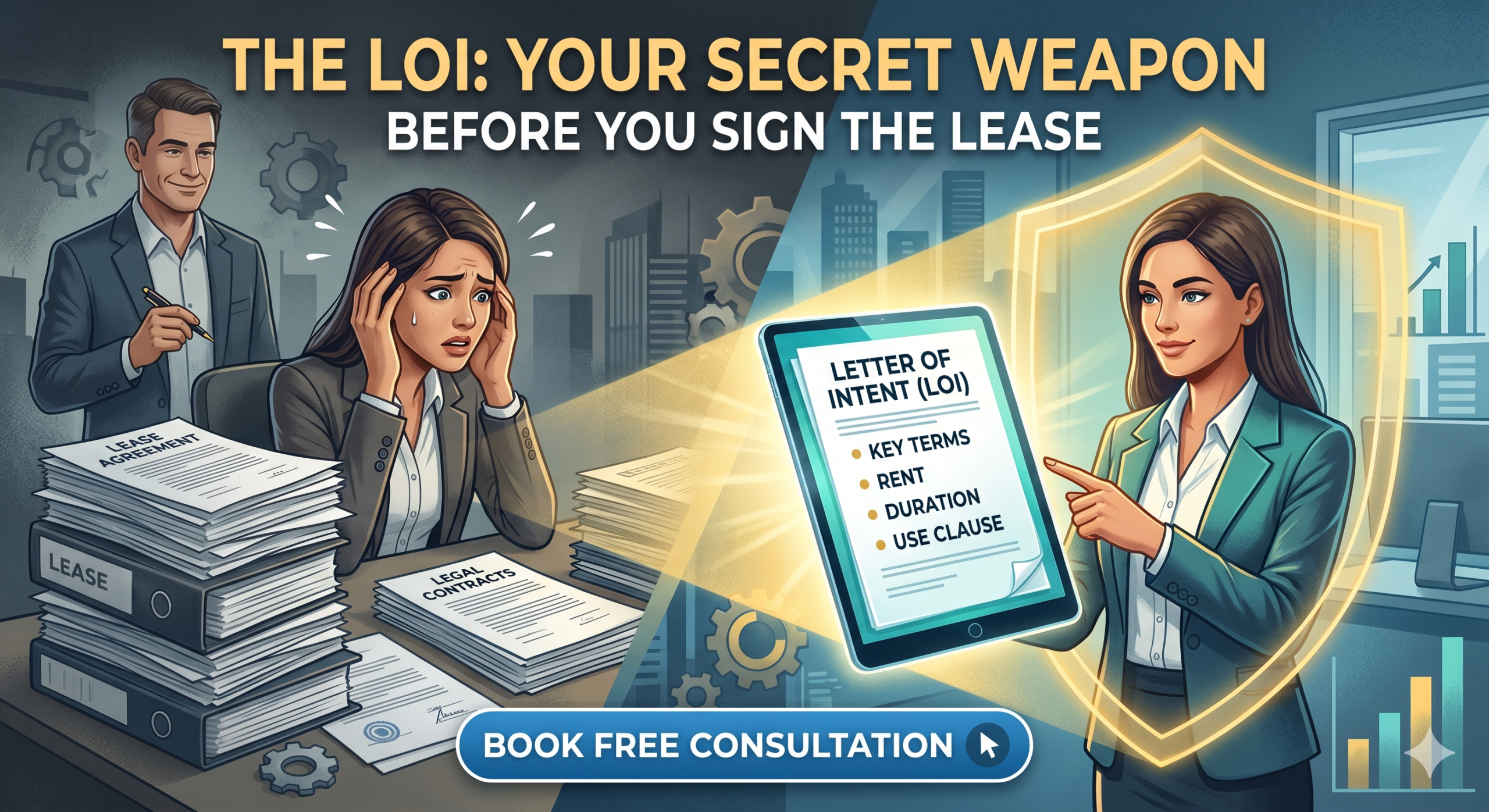
In the fast-paced world of commercial real estate, it’s tempting to rush toward the final lease agreement. You’ve found the perfect space, the location is ideal, and you’re ready to open your doors. However, there is a crucial bridge between “interested” and “obligated” that many small business owners overlook: the Letter of Intent for commercial real estate.
Often dismissed as “just a preliminary step,” the LOI is actually the most influential document you will handle. It is where the deal is won or lost.
Why a Letter of Intent for Commercial Real Estate is Your Best Protection
The LOI serves as the skeleton of your future lease. While the final lease might be 60 pages of dense legal jargon, the LOI is a concise summary of the business terms.
Setting the Stage for Successful Lease Negotiation
The LOI allows you to flush out “deal-breakers” early. If the landlord isn’t willing to budge on a personal guarantee or a specific use clause, it’s better to find that out now rather than after you’ve spent thousands on legal fees reviewing a full lease.
LOI vs Lease Agreement: Knowing the Difference
Understanding the LOI vs lease agreement for small business is vital. Think of the LOI as the “handshake” in writing. While the lease is the legally binding marriage, the LOI is the engagement period where you decide if the marriage is even a good idea. It provides a low-stakes environment to test the landlord’s flexibility.
Essential Elements: How to Write a Letter of Intent for a Business Lease
When you sit down to draft or review an LOI, clarity is your best friend. You aren’t just saying you want the space; you are defining exactly how your business will live in it.
Defining Rent, Term, and Use Clauses
Your LOI should clearly state the base rent, the length of the lease (the “term”), and exactly what you intend to do in the space. Vague language here can lead to restricted operations later.
Negotiating Commercial Lease Terms in an LOI
This is your primary opportunity to ask for “concessions.” Whether it’s a Tenant Improvement (TI) allowance to help build out your shop or a few months of “Free Rent” while you set up, these perks must be secured in the LOI. Once you move to the lease stage, your leverage to ask for these extras drops significantly.
The “Non-Binding” Trap: Is a Letter of Intent Legally Binding?
Most people believe an LOI is entirely non-binding. While that is generally true for the business terms (like rent), there are some “shocking” exceptions.
Understanding Binding vs. Non-Binding Provisions
Often, clauses regarding exclusivity (preventing the landlord from showing the space to others while you negotiate) and confidentiality are legally binding. Breaking these can lead to legal headaches before the lease is even drafted.
Why the Landlord Takes You Seriously Once the LOI is Signed
Psychologically, a signed LOI signals that you are a serious contender. It moves you from a “lead” to a “deal.” Landlords are more likely to invest time and money into preparing the space once they see a signed LOI on their desk.
Avoiding Common Mistakes with Your LOI Template
If you are using a letter of intent template for commercial property, beware of being too vague. Small business owners often say, “We’ll figure out the maintenance details in the lease.” This is a mistake. By the time you get to the lease, the landlord has the upper hand. Define the big ticket items—like HVAC responsibility and parking—right now.
Conclusion: Your Blueprint for Business Growth
The Letter of Intent is not just a formality; it is your blueprint. It gives you the power to walk away if the terms aren’t right and the leverage to demand a better deal if they are. By mastering the LOI, you ensure that your business isn’t just moving into a new space, but moving into a successful future.
Get Expert Eyes on Your Next Deal
Don’t navigate the complexities of commercial real estate alone. Whether you’re reviewing an LOI or preparing to negotiate your first lease, a professional perspective can save you thousands in the long run.
Click here to book your Free Consultation and ensure your next business move is a win.