
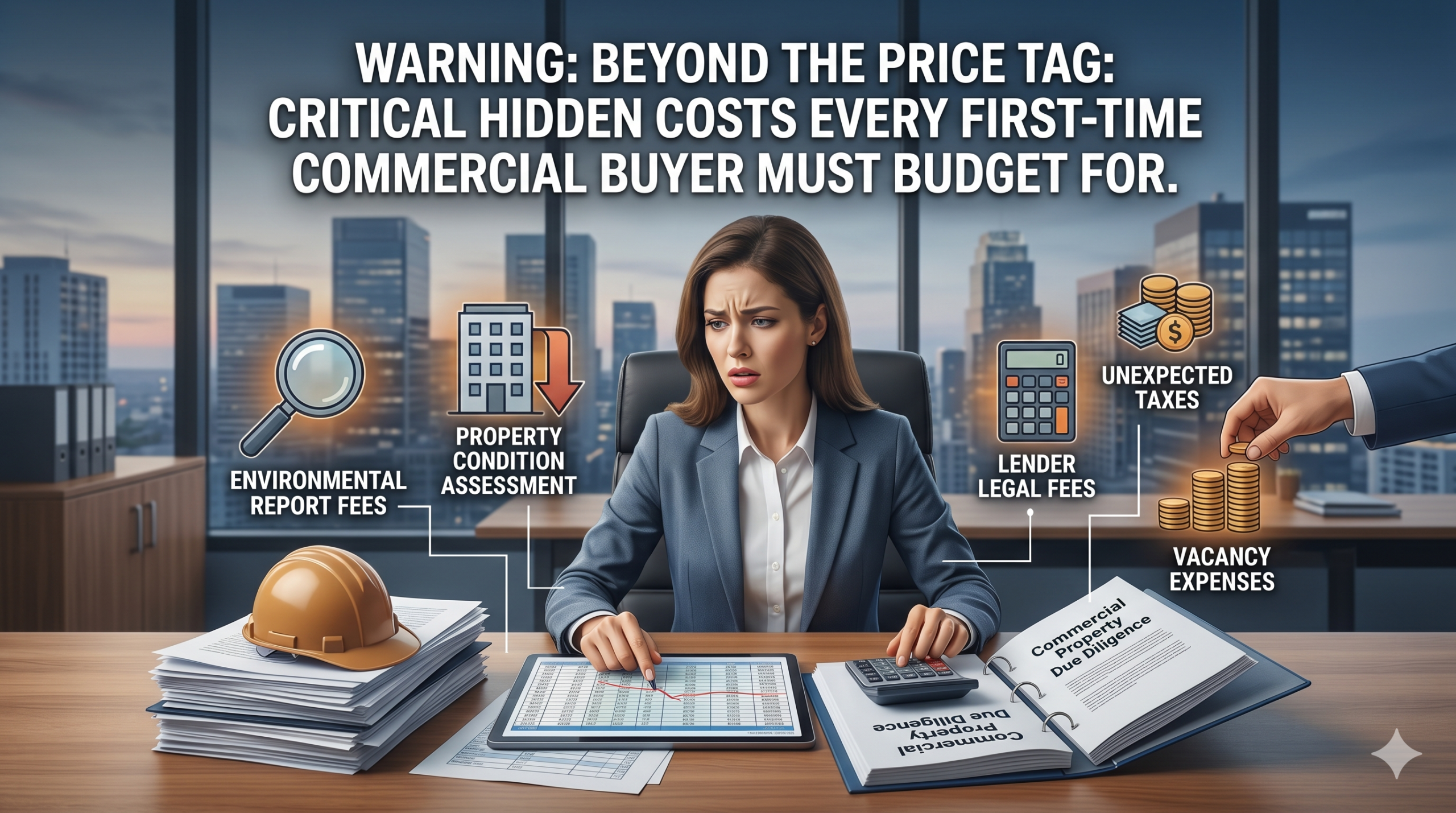
Buying your first commercial property is a massive milestone. It’s an exciting step toward building long-term wealth, but it’s easy to get blinded by the purchase price and the projected rental yields. If you only budget for the sticker price, you are setting yourself up for a financial shock.
When transitioning from residential to commercial real estate, many investors completely overlook the hidden costs first-time commercial buyers budget for incorrectly or miss entirely. From specialized structural assessments to ongoing operational expenses, these unbudgeted outlays can instantly dry up your liquidity if you aren’t prepared.
Here is a breakdown of the critical, hidden expenses you must factor into your financial strategy before signing on the dotted line.
1. The Pre-Purchase Pitfalls: Due Diligence Costs
In residential real estate, a standard home inspection might cost a few hundred dollars. In the commercial world, due diligence is a completely different beast—and it is expensive.
- Phase I Environmental Site Assessment (ESA): Lenders almost always require a Phase I ESA to ensure the property isn’t sitting on contaminated soil (from an old gas station, dry cleaner, or industrial use). If they find anomalies, you’ll have to pay for a Phase II assessment, which involves actual soil and groundwater testing.
- Property Condition Assessments (PCA): This is a comprehensive evaluation of the building’s structural integrity, HVAC systems, roofing, and electrical grids. Think of it as a commercial inspection on steroids.
- ALTA/NSPS Land Title Surveys: Commercial lenders require highly detailed surveys to map out boundary lines, easements, and encroachments.
Budget Reality Check: Expect to spend anywhere from $5,000 to $20,000+ on due diligence alone before you even own the building. If the deal falls through, this money is gone.
2. Loan Origination and Financing Fees
Commercial loans do not play by the same rules as residential mortgages. They are heavily customized, risk-assessed, and come with a premium.
- Origination Fees: Lenders typically charge 1% to 2% of the total loan amount just to put the mortgage together.
- Commercial Appraisal Fees: Evaluating a commercial asset requires analyzing market comps, replacement costs, and income-generation potential. Because it requires a specialized appraiser, these reports routinely cost between $3,000 and $6,000.
- Legal Fees for Lender Counsel: In commercial deals, you often have to pay for your own attorney and cover the legal fees for the lender’s attorney to draft the complex loan documents.
3. The “Triple Net” (NNN) Illusion and Ongoing Operations
If you are buying a building with Triple Net Leases (NNN), the tenants are responsible for property taxes, insurance, and maintenance. It sounds perfect, right? But first-time buyers often forget about vacancy periods.
When a unit sits empty, you become responsible for those NNN expenses.
| Expense Category | What First-Time Buyers Forget |
|---|---|
| Property Taxes | Commercial property reassessments post-sale can trigger a massive jump in your annual tax bill. |
| Common Area Maintenance (CAM) | Parking lot repaving, roof repairs, snow removal, and landscaping costs can fluctuate wildly year-to-year. |
| Property Management | Managing commercial tenants, handling compliance, and enforcing leases requires a specialized commercial manager, usually costing 4% to 10% of gross monthly rents. |
4. Capital Expenditures: TI and LC
Securing a commercial tenant is vastly different from renting out an apartment. To attract a high-quality business, you will likely have to pay out of pocket for:
- Tenant Improvements (TI Allowances): This is money you give to a new tenant to help customize the space for their business needs (e.g., building out a commercial kitchen or setting up office cubicles).
- Leasing Commissions (LC): Commercial brokers don’t work for free. When they find you a long-term tenant, you will owe them a percentage of the entire lease value upfront. For a 5-year lease, this can easily total tens of thousands of dollars.
How to Protect Your Budget
Don’t let these costs scare you away from commercial real estate—let them prepare you.
When building your hidden costs first-time commercial buyers budget, always maintain a liquid capital reserve equal to at least 5% to 10% of the purchase price specifically for post-closing expenses and potential vacancies. Work with a commercial-specific broker and a specialized real estate attorney who can spot line-item traps before they cost you your hard-earned return on investment.